
Free masterclass for parents
The Mock Exam Head Start
GCSE Science and Maths. The work that decides the mocks is happening now, not in the week before them.
Sixty minutes for parents of Year 10 and Year 11 students. You will leave knowing what should be happening in Biology, Chemistry, Physics and Maths between now and the mocks, how to tell whether it actually is, and what to do if it is not.
Saturday 24th October · 11am UK and 2pm Gulf · Live on Zoom · 60 minutes · Free · Recording sent to everyone who registers
Save your place
By registering you agree that I may email you the joining link and information about this event, plus occasional emails about upcoming events. Unsubscribe at any time.
Mocks do not go wrong in mock week
They go wrong quietly, in October, in three specific ways.
Taught in October, revisited in March
A topic is covered once, left alone for months, then relearned from scratch the night before the paper. That is not revision, it is re-teaching, and there is never enough time to do it subject by subject.
The lessons that did not really happen
Staff turnover in international schools, cover lessons in the state sector, a topic ticked off on the scheme of work but never properly taught. Nobody flags it at the time. It surfaces in the mock.
No way of seeing the actual level
A report says working at grade 6 and nothing explains which marks are missing or why. Most parents find out what was really wrong when the mock paper comes back, which is too late for it to be useful.
What you will leave with
Four things you can use the same week. Specific to Science and Maths, not general revision advice.
A straight read on where they actually are
The two questions to ask a science or maths teacher that get you a real answer rather than a reassuring one, and what a class test result does and does not tell you about mock readiness.
Where science marks really go missing
A large share of lost marks in Combined and Triple Science are maths marks: rearranging equations, units, significant figures, reading and drawing graphs. I will show you how to spot that gap now, because the mock will find it in November.
Why five minutes a day beats a lost weekend
What little and often actually looks like across Biology, Chemistry, Physics and Maths, why it makes progress compound instead of evaporate, and how to set it up so it survives a normal week rather than a perfect one.
A plan that does not make you the revision police
What should be happening each week between now and the mocks, what your part in it actually is, and the point at which pushing harder starts working against you.
Who this is for
- Parents of Year 10 and Year 11 students taking GCSE or iGCSE Science and Maths
- Families in the UK and across the Middle East, where a Saturday works for both
- Anyone whose child has coasted on ability so far and is about to meet a paper that rewards method instead
- Anyone who suspects the teaching has been patchy and cannot tell how far behind that has left things
- Parents who want to help and have run out of ways to do it that do not end in an argument
It is written for parents. Your child does not need to be there, though they are welcome to sit in.
Who is running it
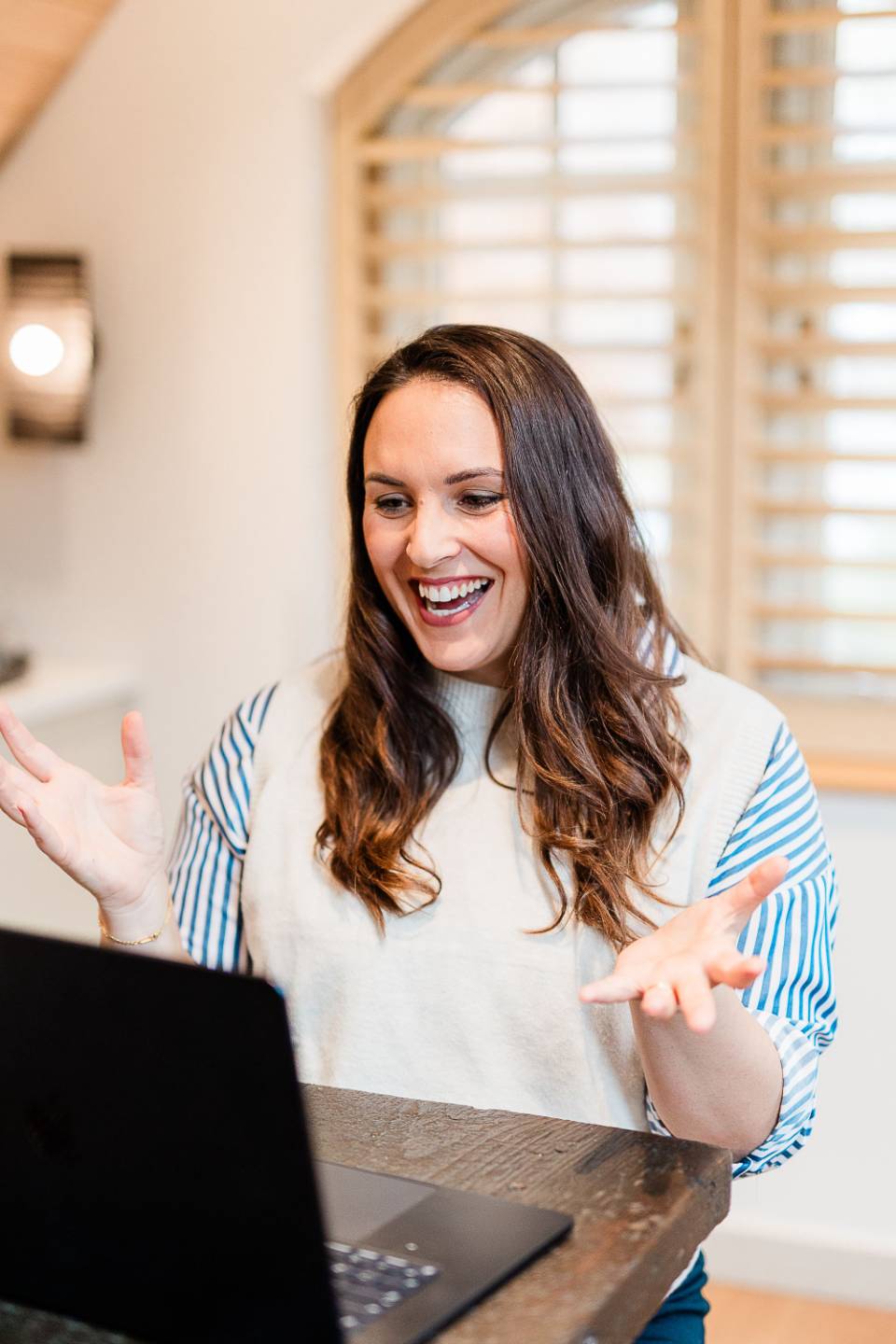
I am Kate. I read Biology at Oxford, I mark GCSE and A-level science papers as a practising examiner, and I spent fifteen years teaching in top UK independent schools.
Marking papers changes what you notice. You stop seeing students who do not know the content, and start seeing students who do know it and cannot show it under exam conditions. Almost every time, it is the method rather than the effort.
This session is what I would say to a friend who rang me in October and asked what to do about it.
And what happens at the end
I will take about five minutes to explain the weekly small group tutorials we run in Biology, Chemistry, Physics and Maths, for families who would rather the structure was built for them than build it themselves. Six to eight students, subject specialist teachers, marked homework with individual feedback, and a written progress report every half term.
There is no pressure to take it up, and it is clearly signposted before it starts. The hour is worth your time either way. If you never speak to me again, you still leave with a plan.
Questions
Is this for me or for my child?
My child is in Year 10. Is it too early?
We are in the Middle East. What time is it for us?
Can I watch it afterwards instead?
Is it Biology, Chemistry, Physics or Maths?
My child is at an international school on a different exam board.
Is it really free, or is it an hour of selling?
Six weeks is enough time. Two weeks is not.
Saturday 24th October, 11am UK and 2pm Gulf. Sixty minutes, live, free, and recorded if you cannot make it.
Save my place